
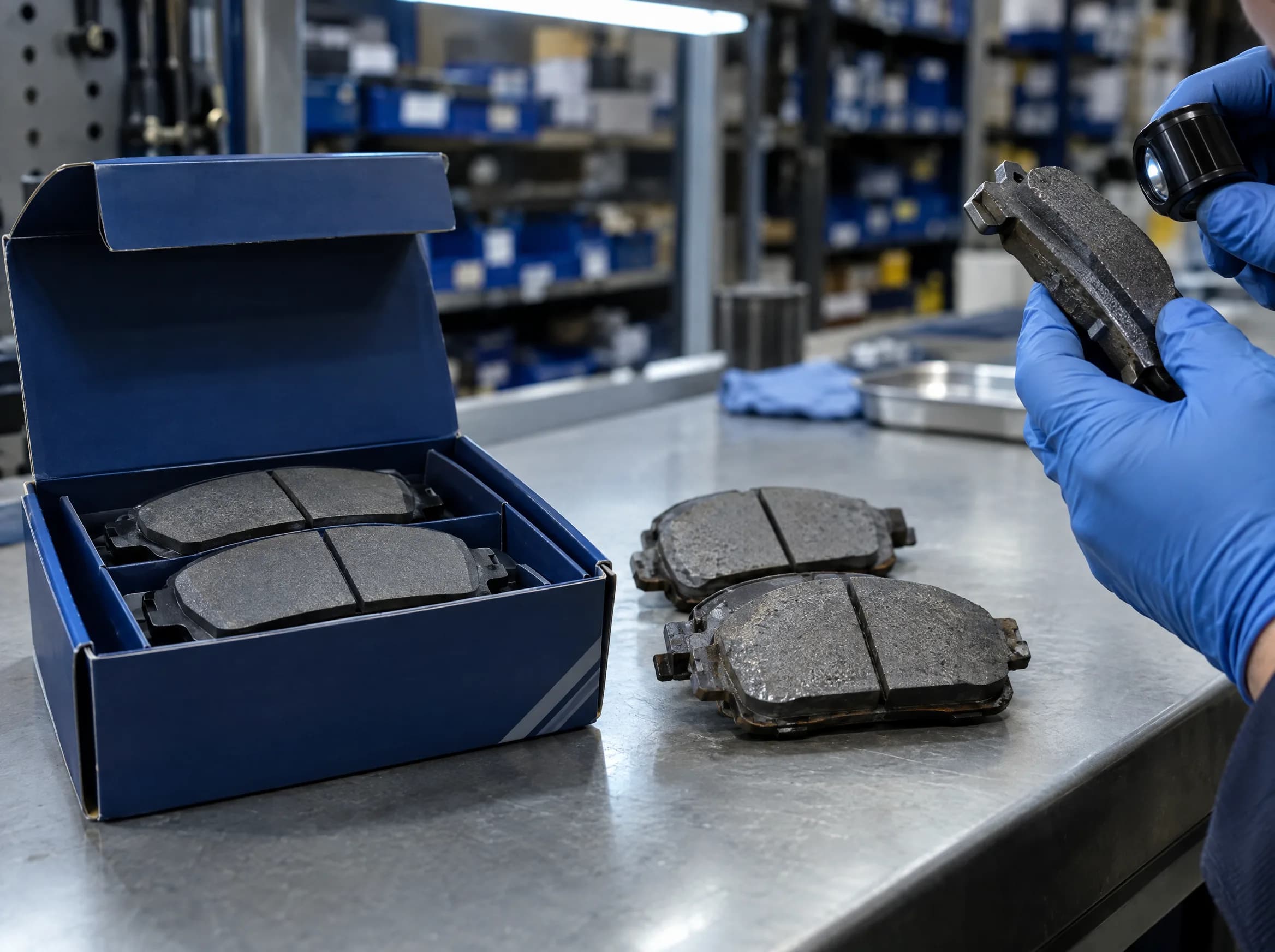
Counterfeit brake pads, suspension arms and ignition coils are common enough in South Africa that the industry now runs a dedicated reporting line for them. Here's how to tell a genuine or branded part from a copy before it goes anywhere near a vehicle.
Counterfeit parts used to be a problem you'd hear about with handbags and watches. In South Africa's automotive aftermarket, it's now serious enough that the Retail Motor Industry Organisation runs a dedicated counterfeit-reporting line, and industry commentary links component failure from fake parts to a real share of preventable breakdowns and accidents on the region's roads. The parts most commonly faked are exactly the ones you don't want to get wrong: brake pads, suspension arms, tyres, ignition coils and airbag modules. Here's how to tell a genuine or properly branded aftermarket part from a copy, before it goes anywhere near a vehicle.
Why this has gotten worse, not better
It comes down to the same numbers behind the industry's growth: South Africa's vehicle parc is ageing past eleven years on average, most of that fleet is out of manufacturer warranty, and demand for affordable replacement parts keeps climbing. We covered the full picture in South Africa's auto parts market by the numbers. It's exactly the kind of high-volume, price-sensitive demand that attracts counterfeiters. A copy brake pad or a copy suspension arm is cheaper to produce than a genuine or properly manufactured aftermarket one, and to an untrained eye on a shelf, the two can look almost identical.
Check the packaging before you check the part
Genuine and properly branded aftermarket packaging is consistent: sharp print, a real batch or lot number, a barcode that actually scans to the right product, and packaging that matches every other unit of that part on the shelf. Copies slip on the details: slightly blurred print, a barcode that's clearly been reused from something else, a security seal that's missing, torn, or obviously reapplied. If the box looks like it was printed on a home printer, treat that as your first warning, not a minor detail.
Check the part itself, not just the box
Weight is one of the fastest tells. A copy brake pad or suspension component is frequently lighter than the genuine equivalent because it's made from inferior or reduced material, exactly the shortcut that leads to premature failure. Look for a manufacturer's mark or date code moulded or stamped into the part itself, not just printed on a sticker that can be swapped between boxes. Casting and machining quality matters too: rough edges, inconsistent finishes, and threads that don't turn smoothly are signs of a part that was never meant to survive a normal service life.
Ask where it actually came from
A legitimate supplier can tell you, without hesitating, where a part was manufactured and which distributor or agent it came through. Parts-Mall Africa sources across nine private-brand lines (PMC, NT, Car-Dex, Pomax, MX, Ex-Trim, Vichura, Pro-Tec and Dashi), backed directly by Parts-Mall Corporation's own manufacturing and export network into 63 countries, which means every part sold through a branch has a traceable line back to source. If a supplier can't answer where a part came from, or the invoice doesn't match the part in your hand, walk away rather than negotiate on price.
If the price looks too good, ask why
Genuine manufacturing, testing and quality control cost money, and that cost is reflected in the price of a properly made part. A price that sits well below every other quote for the identical part number is rarely a bargain. It usually means something was skipped to make that price possible.
What to do if you think you've already fitted a copy
Stop using the part if it's safety-related (brakes, steering, suspension or airbags), and don't wait for it to fail first. Keep the packaging and the invoice, report it through the RMI's counterfeit-reporting channel, and go back to whoever supplied it with both in hand. A supplier with nothing to hide will want the report as much as you do.
The fastest way to avoid this entirely is to buy through a network that can already tell you where a part came from. Find your nearest Parts-Mall branch, pair it with our fitment checklist to get the right part fitted right the first time, or if you're ordering by the box rather than the unit, see how Parts-Mall's distributor and franchise network sources and moves stock at volume.