
A rattle for a few seconds after a cold start is the classic sign of a stretched timing chain. Here is what causes it and what to replace with the chain.
A rattle from the front of the engine for a second or two after a cold start is easy to dismiss because it goes away. It is also the classic sign of a worn timing chain system, and on many engines the repair is far cheaper before the chain fails than after. This guide covers what timing chain rattle means, what causes a timing chain to stretch, which parts to replace with it, and how a timing chain differs from a timing belt.
What the timing chain does
The timing chain links the crankshaft to the camshafts so the valves open and close in the correct relationship to piston position. It runs in engine oil and is held at the right tension by a hydraulic tensioner, while guides control its path. If the timing drifts or the chain skips, valves can meet pistons.
Timing chain rattle on cold start: why it happens
The hydraulic tensioner relies on oil pressure to take up slack. For a moment after a cold start, before oil pressure fills it, a stretched chain or worn guide is loose enough to rattle against the cover. Once pressure builds, the noise quietens, which is exactly why it gets ignored. A rattle that returns on sudden throttle changes points the same way.
Other signs of a stretched timing chain
A rattle from the timing cover that fades as oil pressure builds.
Camshaft and crankshaft correlation fault codes, with the check engine light on.
Rough running, misfire or a loss of power.
A rattle that comes back under sudden throttle changes.
A fault code alone does not prove the chain is at fault. It identifies the circuit reporting the problem, so a workshop will check the sensors and wiring as well before condemning the chain.
Why you should not just monitor it
On an interference engine, a failed timing component does not leave you stranded. It destroys the engine, because the valves meet the pistons and the repair becomes a rebuild. Timing chains were once considered lifetime parts, but on many modern engines chain stretch, worn guides and failing tensioners are common at higher mileage. A cold-start rattle is worth investigating straight away.
What causes a timing chain to stretch or rattle
High mileage is the main factor. After that, the tensioner and guides depend on clean oil at proper pressure, so overdue oil changes, a low oil level and short trips that never fully warm the engine all work against them. Keeping to the service book interval, and shortening it for hard use, is the cheapest protection a timing chain has.
What to replace with the timing chain
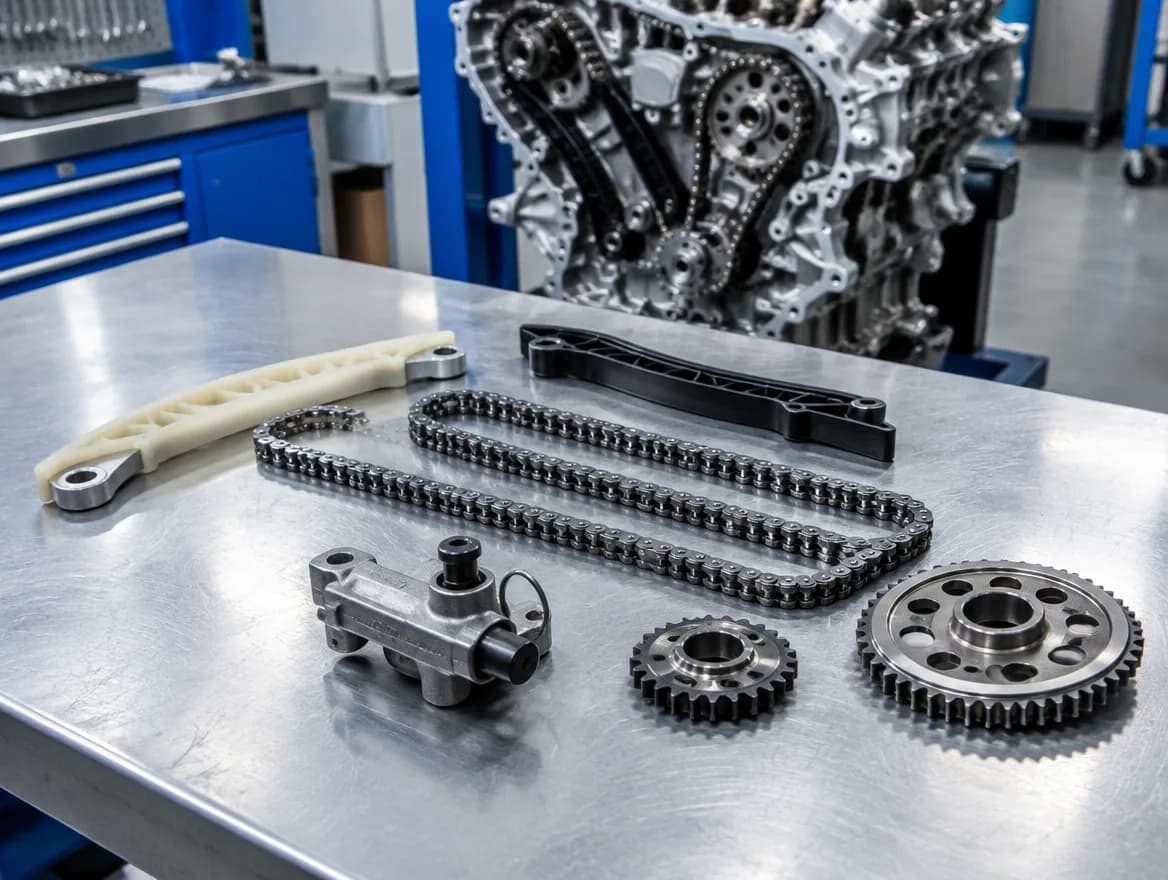
Replace the whole assembly rather than just the chain. The chain, guides, tensioner and sprockets wear together, the labour to reach them is identical, and a new chain fitted against a worn tensioner will slap and stretch early. See our range of timing chain assemblies and timing chains. While the cover is off, ask about the timing cover gasket and the front crankshaft seal, since replacing them later means doing the same labour twice. Gaskets are listed in the gaskets and seals range.
Timing belt vs timing chain
Timing belt. A toothed rubber belt, normally replaced at an interval set by the vehicle maker in distance, time or both. Check the service book. A belt can fail with little warning, which is why the interval matters.
Timing chain. A metal chain that runs inside the engine in oil. There is no fixed interval on most engines, and replacement is driven by wear and symptoms rather than the calendar.
Which one your car has depends on the engine code, not the model name, because the same model can use a belt on one engine and a chain on another. Check the engine code stamped on the block, or send it to your branch with the VIN. The Parts-Mall vehicle pages list the models and engines the network covers.
How to order the right timing chain kit
The engine code from the block, not just the capacity.
Whether the kit includes the tensioner, guides and sprockets.
Whether the engine is an interference design.
Whether you also need the timing cover gasket and front crankshaft seal.
A photo of the old chain or tensioner sent over WhatsApp helps, and our fitment checklist covers the rest. Then call your nearest branch with the VIN and engine code, and to avoid a copy part in a job this size, read our guide to counterfeit car parts.
Timing chain questions
How long does a timing chain last?
There is no single figure. Most chains are designed to last a long time, but there is no fixed interval on most engines, and wear shows up at higher mileage, faster with poor oil maintenance.
Can I keep driving with a rattling timing chain?
It is not advisable. On an interference engine, a chain that jumps a tooth or fails can destroy the engine, so the sensible move is to have it inspected as soon as you hear the rattle.
Should the tensioner and guides be replaced with the chain?
Yes. They wear as a set, and the labour to reach them is already spent. A worn tensioner shortens the life of a new chain.
Does a check engine light mean the timing chain has failed?
Not necessarily. Camshaft and crankshaft correlation codes can point to the chain, but the sensors and wiring can trigger the same codes, so a diagnosis should confirm it before the engine is opened up.